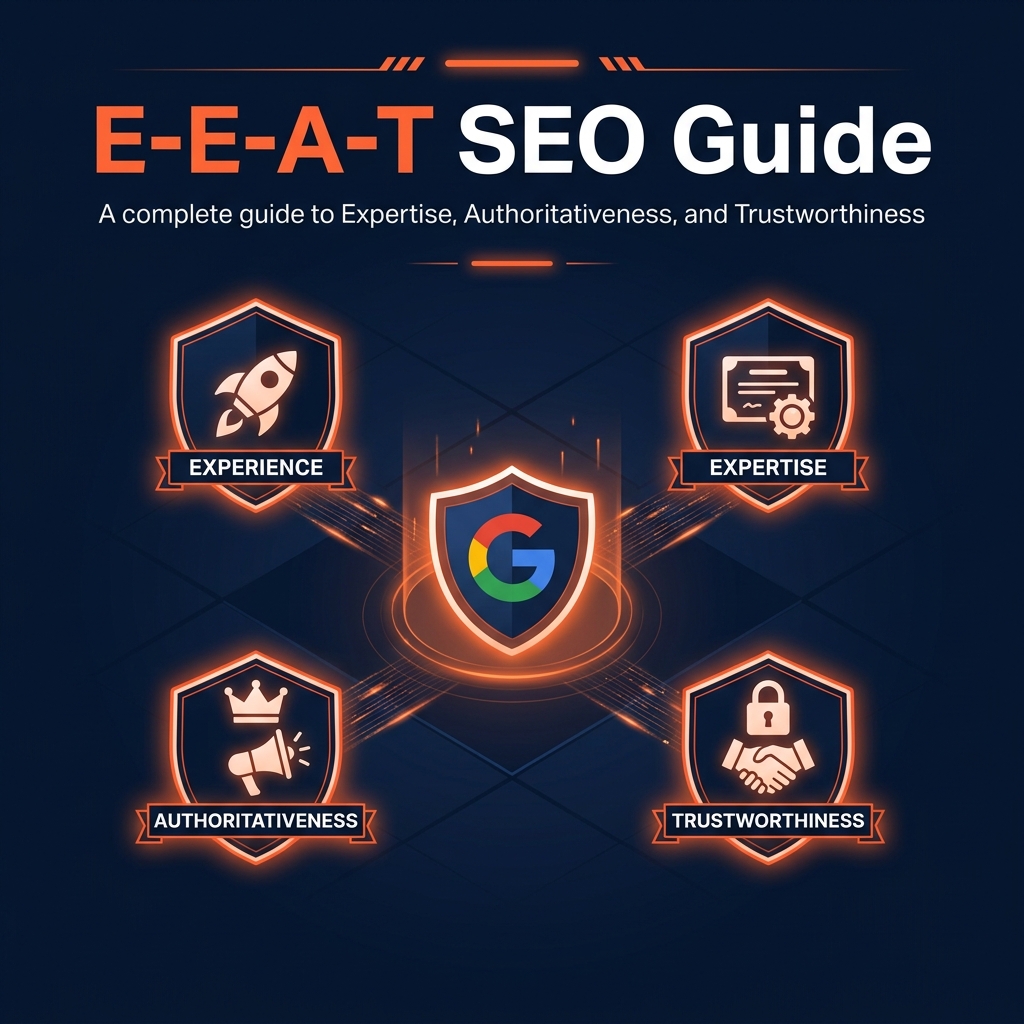
E-E-A-T (Experience, Expertise, Authoritativeness, Trustworthiness) is one of Google’s most critical framework components for evaluating content quality and ranking websites in 2026. With the rise of AI-generated content flooding the web, Google places unprecedented weight on real human experience and verified domain authority.
At Grothify, optimizing E-E-A-T signals is built directly into our organic growth playbook — protecting clients from core algorithm updates while driving sustainable traffic growth. In this guide, we break down what E-E-A-T means and how to build these signals for your website.
Is Your Website Vulnerable to E-E-A-T Updates?
We’ll perform a full audit of your author profiles, schema markup, trust signals & citations.
Deconstructing E-E-A-T
| Pillar | What Google Evaluates | How to Demonstrate It |
|---|---|---|
| Experience | First-hand, real-world experience with the topic | Original photos, case studies, hands-on reviews, personal anecdotes |
| Expertise | Formal credentials, subject matter skill & depth | Author bios, degrees, industry certifications, detailed tutorials |
| Authoritativeness | Industry recognition, press & backlink reputation | Media mentions, brand search volume, Wikipedia/Wikidata entries |
| Trustworthiness | Transparency, accuracy, security & business legitimacy | HTTPS, privacy policy, clear contact details, customer reviews, verified address |
Trustworthiness is at the center of the E-E-A-T concept. Untrustworthy sites cannot rank high on Google regardless of how strong their experience or expertise appears.
E-E-A-T & YMYL (Your Money or Your Life)
Google applies strict E-E-A-T evaluation to **YMYL** topics — content that could impact a reader’s health, financial stability, safety, or happiness. Categories including finance, healthcare, legal, e-commerce, and digital marketing agency services require flawless E-E-A-T signals.
10 Actionable Steps to Improve E-E-A-T Signals
- Create Detailed Author Bios: Add verified author bios with headshots, credentials, social links (LinkedIn, Twitter), and publications to every article.
- Implement Person Schema: Add structured JSON-LD `Person` data linking author profiles to external authority platforms.
- Include First-Hand Data & Visuals: Avoid generic stock images. Include custom screenshots, video walkthroughs, and original benchmarks.
- Cite Reliable External Sources: Link out to reputable sources, government domains (.gov), educational institutions (.edu), and industry benchmark studies.
- Maintain Complete About & Contact Pages: Include your registered business address, phone number, founding story, leadership team, and press mentions.
- Publish Case Studies & Social Proof: Highlight client results with verified metrics (e.g. 180% organic growth case studies).
- Earn High-Authority Niche Backlinks: Build editorial backlinks from respected industry blogs and news outlets.
- Monitor Brand Reputation: Collect Google Business Profile reviews, Trustpilot ratings, and Glassdoor reviews.
- Keep Technical Infrastructure Secure: Enforce SSL (HTTPS), fast server response times (see our technical SEO checklist), and clean privacy disclosures.
- Regularly Update Outdated Content: Audit old posts annually to update facts, dates, statistics, and broken links.
Build Domain Authority with Grothify
Our SEO team crafts content strategies designed specifically to satisfy Google’s E-E-A-T criteria.
Frequently Asked Questions
Is E-E-A-T a direct ranking factor?
E-E-A-T is not a single direct score in Google’s algorithm. Instead, Google uses hundreds of algorithmic signals (backlinks, schema, author entities, page speed, reviews) that collectively evaluate E-E-A-T quality.
Can AI-generated content satisfy E-E-A-T?
Raw, unedited AI content lacks genuine human experience. To satisfy E-E-A-T, AI-assisted drafts must be reviewed, expanded, and enriched by subject matter experts with original insights and data.
Written by Mohammed Ouzair, Founder & SEO Specialist at Grothify. Part of our SEO services. Follow on Instagram and LinkedIn.