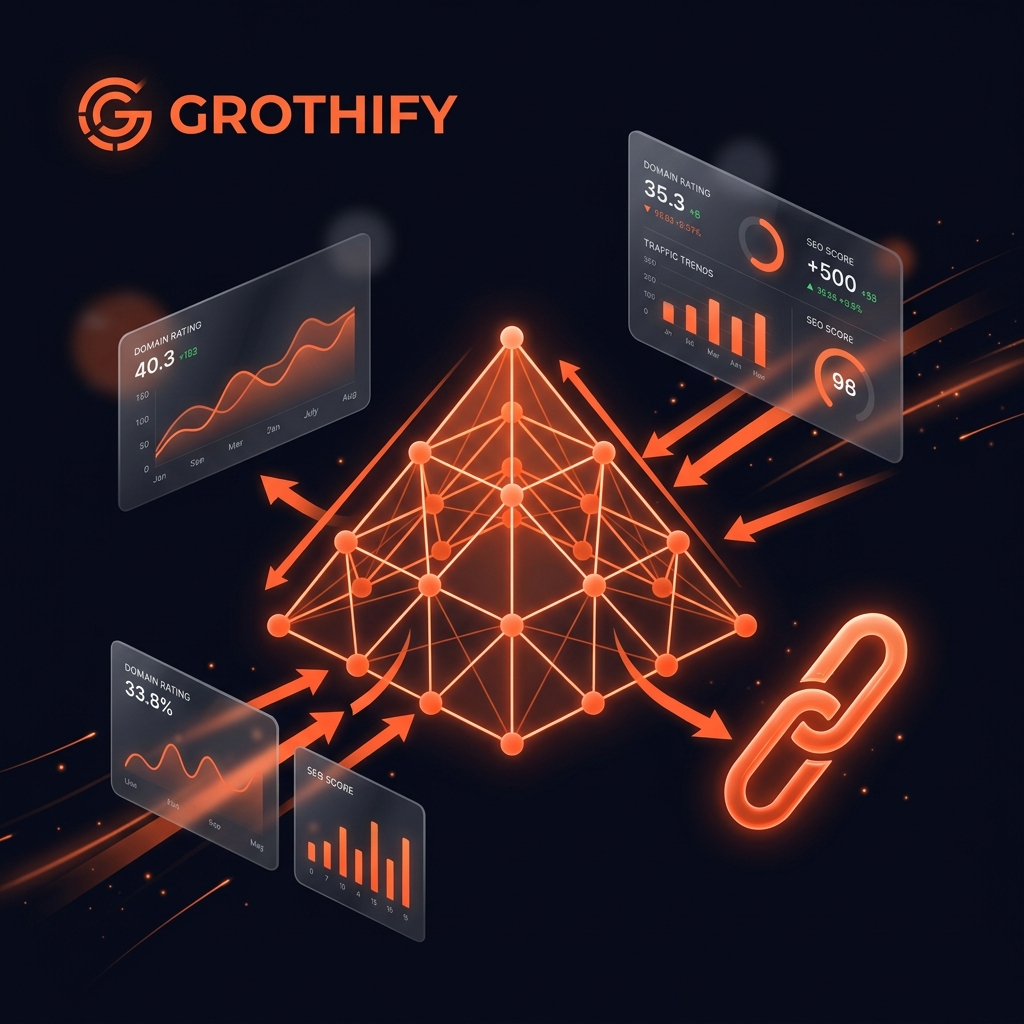
Internal linking is one of the most underutilized technical SEO levers available to website owners. Unlike backlinks (which depend on external third parties), internal links are 100% within your control. A strategic internal linking structure distributes PageRank authority, helps Google discover new content faster, and establishes clear topical clusters.
At Grothify, optimizing internal link architecture is a core pillar of our organic growth methodology — driving up to 180% organic traffic increases without acquiring a single new backlink. Here is our step-by-step internal linking guide for 2026.
Want an Internal Link & Architecture Audit?
We’ll map your site structure, find orphan pages & optimize anchor text distribution for free.
Why Internal Linking Matters for SEO
- PageRank Distribution: Links pass authority (equity) from high-authority pages (like your Homepage or Pillar Pages) to lower-tier cluster articles.
- Topical Authority Signals: Linking related articles together signals to Google’s algorithms that your domain possesses deep expertise in that topic area (supporting Google’s E-E-A-T guidelines).
- Crawl Efficiency: Helps search engine spiders discover newly published content immediately without waiting for sitemap recrawls.
- User Dwell Time: Relevant contextual links keep users engaged on your site longer, reducing bounce rate.
The Topic Cluster Internal Linking Model
Organize your content into a hub-and-spoke hierarchy:
| Tier Level | Page Type | Linking Rules |
|---|---|---|
| Tier 1 (Hub) | Pillar Service Page (e.g. /seo-services/) |
Receives links from all cluster articles |
| Tier 2 (Spoke) | Primary Cluster Guides (e.g. /keyword-research-guide/) |
Links to Pillar Page + sister cluster articles |
| Tier 3 (Sub-Spoke) | Niche How-To Articles | Links to Primary Cluster & Pillar Page |
5 Rules for Anchor Text Optimization
- Use Descriptive Keyword Anchors: Instead of “click here” or “read more”, use descriptive text like “our keyword research guide“.
- Avoid Exact-Match Over-Optimization: Vary your anchor text naturally across different articles (use broad match, partial match, and long-tail variations).
- Link Contextually Within Body Copy: Links placed within main body paragraphs carry significantly more weight than footer or sidebar links.
- Keep Link Count Reasonable: Aim for 3 to 5 relevant internal links per 1,000 words of content.
- Fix Broken Internal Links (404s): Regularly audit your website using Screaming Frog to identify and update broken internal links.
Let Grothify Build Your SEO Architecture
We design scalable SEO content silos that maximize organic keyword rankings.
Frequently Asked Questions
What is an orphan page?
An orphan page is a webpage on your site that has zero internal links pointing to it. Because search engine crawlers follow links, orphan pages are difficult for Google to discover and rarely rank well.
Written by Mohammed Ouzair, Founder & Technical SEO Lead at Grothify. Part of our SEO services. Follow on Instagram and LinkedIn.