Quality Score is Google Ads’ rating of how relevant and useful your ad experience is — and it directly impacts how much you pay per click. A high Quality Score means lower CPCs, better ad positions, and more conversions for less budget.
At Grothify, improving Quality Score is one of the first optimizations we make — it’s how we’ve achieved up to 908% ROAS for clients. This guide breaks down exactly what Quality Score is, how Google calculates it, and 12 proven ways to improve it.
Low Quality Scores? Let Us Fix It.
Free Google Ads audit — we’ll identify low-QS keywords and show you exactly how to fix them.
What Is Quality Score?
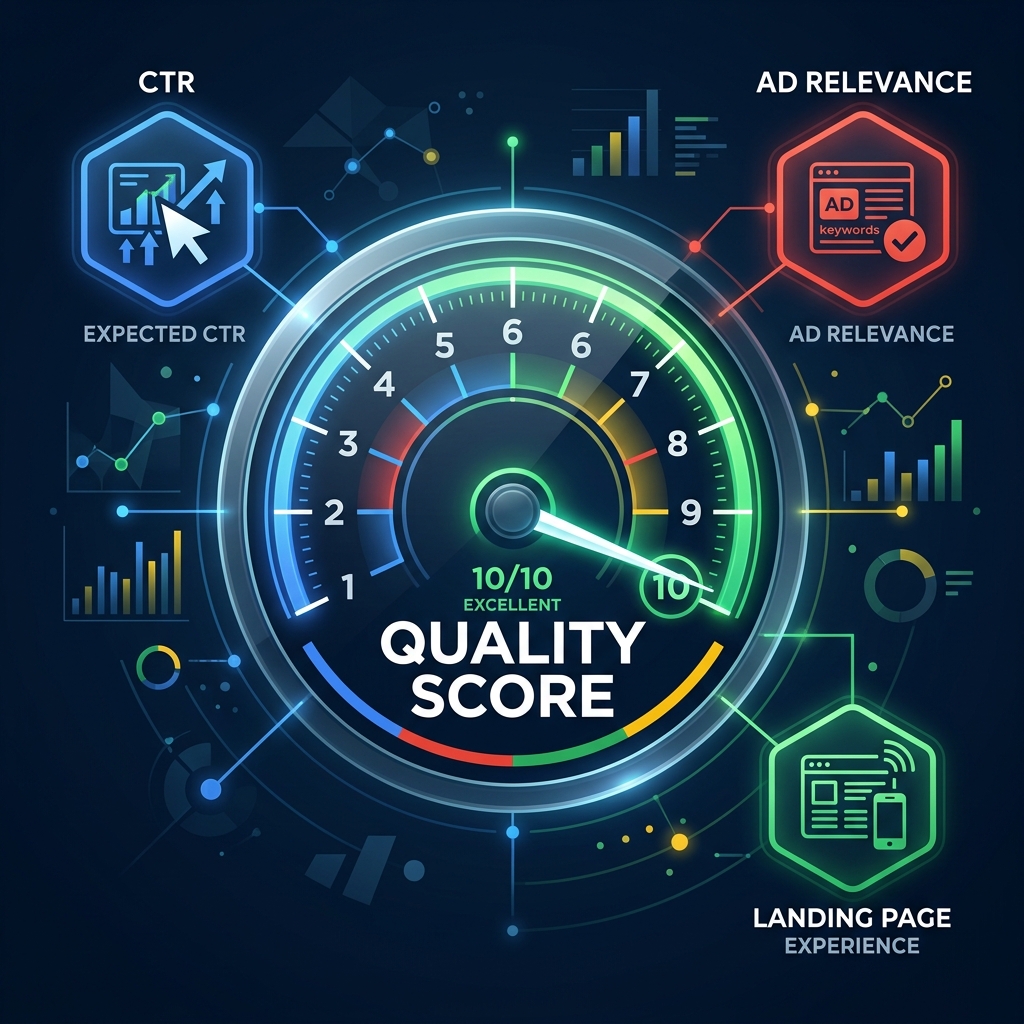
Quality Score is a 1–10 rating Google assigns to each keyword in your account. It measures how relevant your ads, keywords, and landing pages are to a user’s search query. Higher scores = lower costs and better positions.
Google uses Quality Score in its Ad Rank formula:
Ad Rank = Max CPC Bid × Quality Score × Expected Impact of Extensions
This means an advertiser with a $2 bid and QS of 8 (rank = 16) outranks an advertiser bidding $4 with QS of 3 (rank = 12) — while paying less.
The 3 Factors That Determine Quality Score
1. Expected Click-Through Rate (CTR)
Google’s prediction of how likely users are to click your ad. Based on historical CTR of your keyword, adjusted for ad position. If your ads consistently get clicked, Google rewards you with a higher expected CTR.
2. Ad Relevance
How closely your ad copy matches the search query. If someone searches “affordable SEO services” and your ad headline says “Premium Marketing Agency,” relevance is low. Include the keyword in your headlines and descriptions.
3. Landing Page Experience
How relevant and useful your landing page is after the click. Google evaluates page load speed, mobile-friendliness, content relevance to the ad/keyword, and ease of navigation.
| Factor | Weight | Status Values |
|---|---|---|
| Expected CTR | ~39% | Below Average / Average / Above Average |
| Ad Relevance | ~22% | Below Average / Average / Above Average |
| Landing Page Experience | ~39% | Below Average / Average / Above Average |
What a Good Quality Score Looks Like
| QS Range | Rating | CPC Impact | Action |
|---|---|---|---|
| 8–10 | Excellent | 20–50% lower CPC | Maintain and scale |
| 6–7 | Good | Average CPC | Optimize ad copy |
| 4–5 | Average | 10–25% higher CPC | Improve relevance |
| 1–3 | Poor | 50–400% higher CPC | Pause or restructure |
12 Proven Ways to Improve Quality Score
Improve Expected CTR (Tactics 1–4)
1. Write Compelling Headlines with Keywords
Include the primary keyword in at least 2 of your 15 headlines. Use power words: “Free”, “Proven”, “2026”, “Guaranteed”. Highlight unique value propositions.
2. Use All Available Ad Extensions
Sitelinks, callouts, structured snippets, and call extensions increase ad real estate and CTR by 10–20%. Google considers extension usage in QS calculations.
3. Test Multiple RSA Combinations
Write 15 unique headlines and 4 descriptions per RSA. Google tests combinations automatically. Pin only your best-performing headline to position 1.
4. Use Dynamic Keyword Insertion (DKI)
DKI automatically inserts the user’s search query into your ad. Syntax: {KeyWord:Default Text}. This dramatically improves relevance and CTR for broad keyword sets.
Improve Ad Relevance (Tactics 5–8)
5. Structure Tight Ad Groups (SKAG/STAG)
Group 5–10 closely related keywords per ad group. Each ad group should have ads that directly reference those keywords. Avoid dumping 50+ keywords into one ad group.
6. Match Ad Copy to Search Intent
If the keyword is “affordable SEO services,” your ad should say “Affordable SEO Services” — not “Premium Digital Marketing.” Intent mismatch kills ad relevance scores.
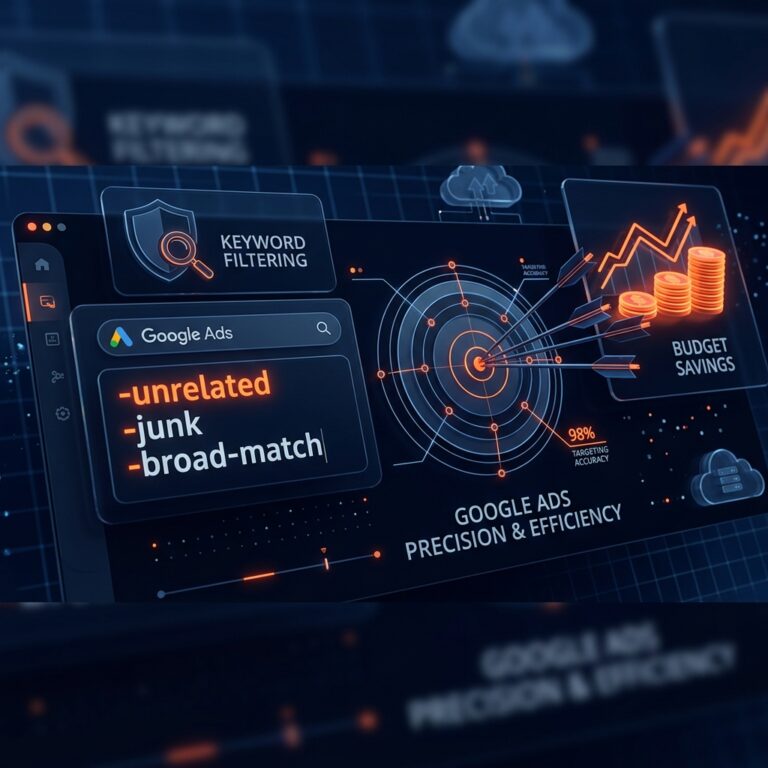
7. Use Negative Keywords Aggressively
Negative keywords prevent your ads from showing for irrelevant searches. Add 50–100+ negatives per campaign. Review Search Terms Report weekly. Check our CPC reduction guide for more tactics.
8. Create Keyword-Specific Landing Pages
Don’t send all traffic to your homepage. Create dedicated landing pages that match each ad group’s keywords and messaging.
Improve Landing Page Experience (Tactics 9–12)
9. Page Speed Under 3 Seconds
Slow pages kill conversions and Quality Score. Compress images to WebP, use CDN, minimize JavaScript, enable caching. Test at PageSpeed Insights.
10. Mobile-Optimized Landing Pages
60%+ of clicks come from mobile. Ensure responsive design, large tap targets, readable fonts, and fast mobile load times.
11. Match Landing Page Content to Ad Promise
If your ad says “Free SEO Audit,” the landing page must prominently feature a free SEO audit form. Don’t bait-and-switch — Google checks this.
12. Clear CTA Above the Fold
Place your primary call-to-action (form, button, phone number) immediately visible without scrolling. Reduce friction — fewer form fields = higher conversions.
We’ve Improved QS for 100+ Campaigns
Grothify’s PPC team will audit your account, fix low-QS keywords, and reduce your cost per conversion.
Frequently Asked Questions
Does Quality Score affect ad position?
Yes, directly. Ad Rank = Bid × Quality Score. A QS of 10 with a $2 bid beats a QS of 4 with a $4 bid. Higher QS gets you better positions at lower costs.
How quickly can Quality Score improve?
Ad relevance and CTR improvements can show within 1–2 weeks. Landing page experience takes longer — typically 2–4 weeks after changes. Google needs sufficient click data to recalculate.
Should I pause low Quality Score keywords?
If a keyword has QS 1–3 after optimization attempts, pause it. It’s costing you 2–4x more than it should. Restructure the ad group with tighter keyword matching and better ad copy before reactivating.
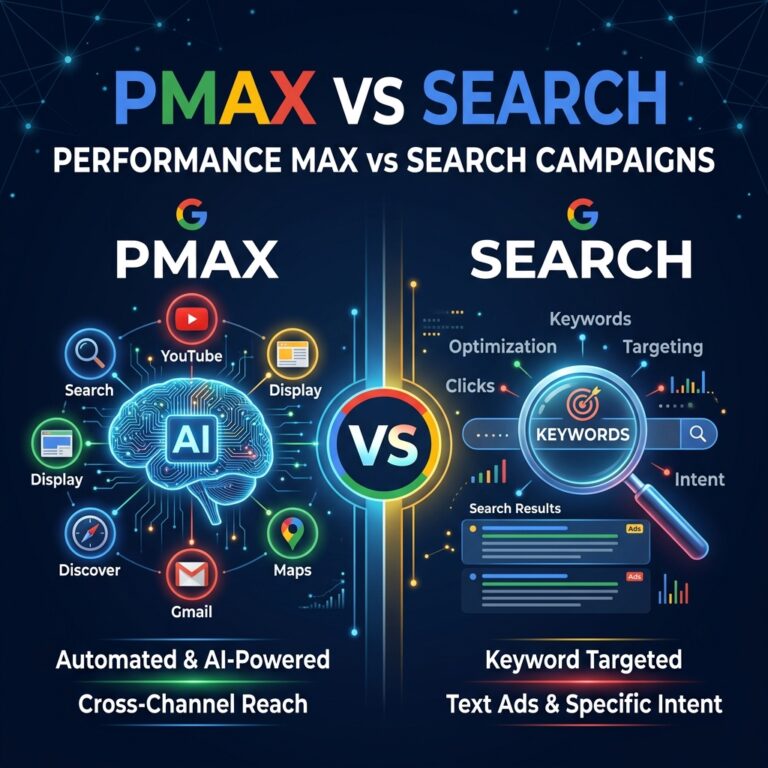
Does Quality Score matter for PMax campaigns?
Performance Max doesn’t show traditional Quality Scores. However, the underlying signals (relevance, CTR, landing page) still influence auction performance. Best practices still apply.
Written by Mohammed Ouzair, Google Ads Certified Specialist & Founder of Grothify. Part of our Google Ads services. Follow on Instagram and LinkedIn.